


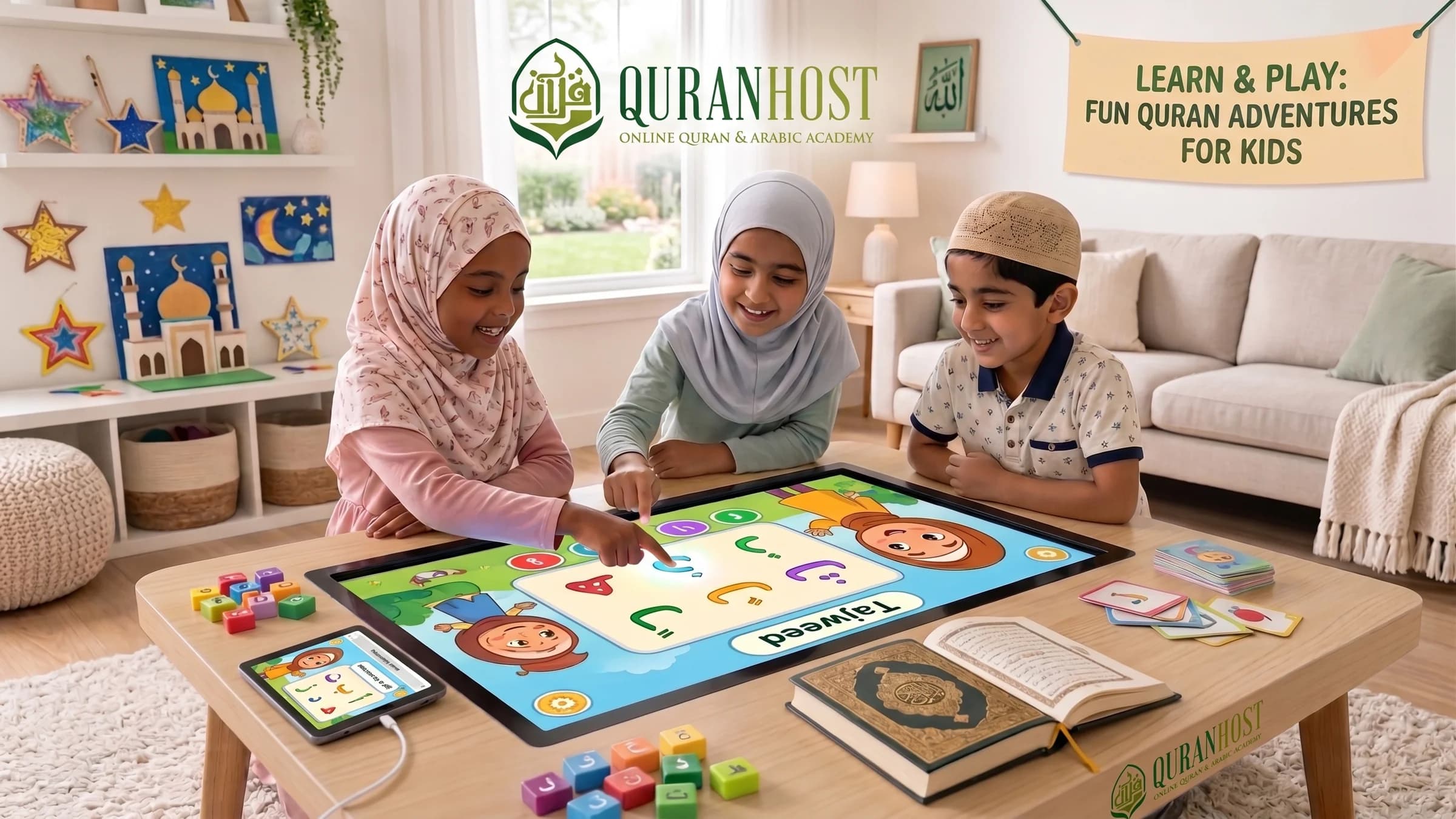
Getting your child a Quran tutor is the easy part. Making sure they are learning properly, and not quietly struggling, is the part that takes attention. A child who finds lessons hard will drift, and a child who enjoys them will keep going long after you stop supervising.
These are nine practical things parents can do to make Quran learning easier, and more enjoyable, for a child. If you are still deciding when to begin, our guide to the right age to start teaching the Quran covers readiness and what to learn first.
For the wider picture, including what a first lesson involves and how the stages fit together, see our guide to getting a child started.
1. Hire An Expert Teacher
Everything else follows from the teacher. Look for someone patient with young children, who corrects gently and keeps a lesson moving, rather than simply the most qualified person available. Ask for a trial lesson and watch how your child responds to them.
If it is not working after a few weeks, ask to change teacher. That is a normal request, not a complaint, and a mismatch of personality holds a child back more than most parents realise.
2. Give Them A Perfect Study Spot
Give your child one place to sit for lessons, and keep it the same each time. A quiet corner, decent light, a steady internet connection and a device that does not freeze halfway through will do more for concentration than any amount of encouragement.
This matters even more once your child is memorising, because Hifz needs a calm setting and an absence of interruptions. Keep phones, television and siblings out of the room for the half hour.
3. Ask For The Child’s Interest
A child enrolled in Quran classes can work on several different things: reading, recitation, Tajweed or memorisation. Ask your child which of these appeals to them before you pick a course, and let them have a say in it.
A child who chose the course will sit down to it far more willingly than one who was placed in it, and that willingness is worth more over a year than any shortcut in the syllabus.
4. Solve Their Problems
Children rarely announce that they are stuck. They go quiet, or they start finding reasons not to join the lesson. Ask specific questions rather than general ones: which letter is hard, what the teacher asked them to revise, what they got wrong last time.
Some problems a child can solve alone, and it is worth letting them. Others will block progress until an adult steps in. Raise those with the teacher early, or with the academy administration if they persist, rather than waiting to see whether they settle.
5. Hire A Female Tutor For Girls
Many families prefer their daughter to be taught by a woman, and girls are often more comfortable reciting in front of a female teacher, particularly as they get older. Comfort affects both how well and how fast a child learns.
Female Quran teachers are available on request, so ask when you enrol rather than waiting to see who is assigned.
6. Take Care Of Their Health
Attendance is the quiet factor behind most slow progress. A child who misses a week here and a week there loses more ground than the missed lessons alone suggest, because revision falls behind too.
Keep an eye on sleep in particular. A tired child cannot concentrate for thirty minutes, and lessons scheduled too late in the evening tend to be the ones that get missed. A reasonable bedtime and a proper meal before the lesson will do more than anything you can add to their diet.
7. Help Your Child Stay Organised
Children need the structure put in place for them. Check that your child is joining lessons on time and attending regularly, and if they are memorising the Quran, set aside a short slot each day outside the lesson for revision. Ten consistent minutes beats an hour at the weekend.
Keep a simple record of what has been covered so you can see progress building rather than guessing at it.
8. Give the Words Meaning Before Memorising
A child memorises words far more readily when the words mean something. When your child is given a passage to learn, tell them which surah it comes from and what it is about before they start repeating it.
Tell the story first. Whether the lesson is patience, forgiveness or humility, let them hear it as a story they can follow, then connect it back to the verses they are learning. The Quran recounts real events, and children who are interested in those events remember both the account and the words attached to it.
Playing recitation at home helps in the same way, particularly while your child is settling down to sleep. The sound and rhythm become familiar long before they have to produce it themselves.
9. Praise Often and Reward Small
Children respond to being noticed. Praise the effort rather than only the result, so that a child who struggled through a difficult page gets the same recognition as one who read it easily.
- Mark the milestones. Finishing a chapter of the Qaida or learning a new short surah is worth making a small occasion of.
- Keep rewards small and frequent rather than large and distant. A young child cannot work towards something a month away.
- Let them hear you tell someone else how well they are doing.
- Build in family activities and games around what they are learning, so the Quran is part of family life rather than only a lesson on a screen.
Allah says: “And We send down of the Qur'an that which is healing and mercy for the believers”, Al-Isra 17:82. A child who associates the Quran with warmth and encouragement carries that association into adulthood; one who associates it with pressure often does not.
Conclusion
None of this requires a great deal of time. A patient teacher, a fixed quiet spot, short regular sessions, stories that give the words meaning and steady encouragement will carry most children a long way.
QuranHost teaches online Quran classes for kids one to one, starting with Noorani Qaida before moving on to the Quran itself, at a pace set for your child. You can book a free trial class with no card required.