


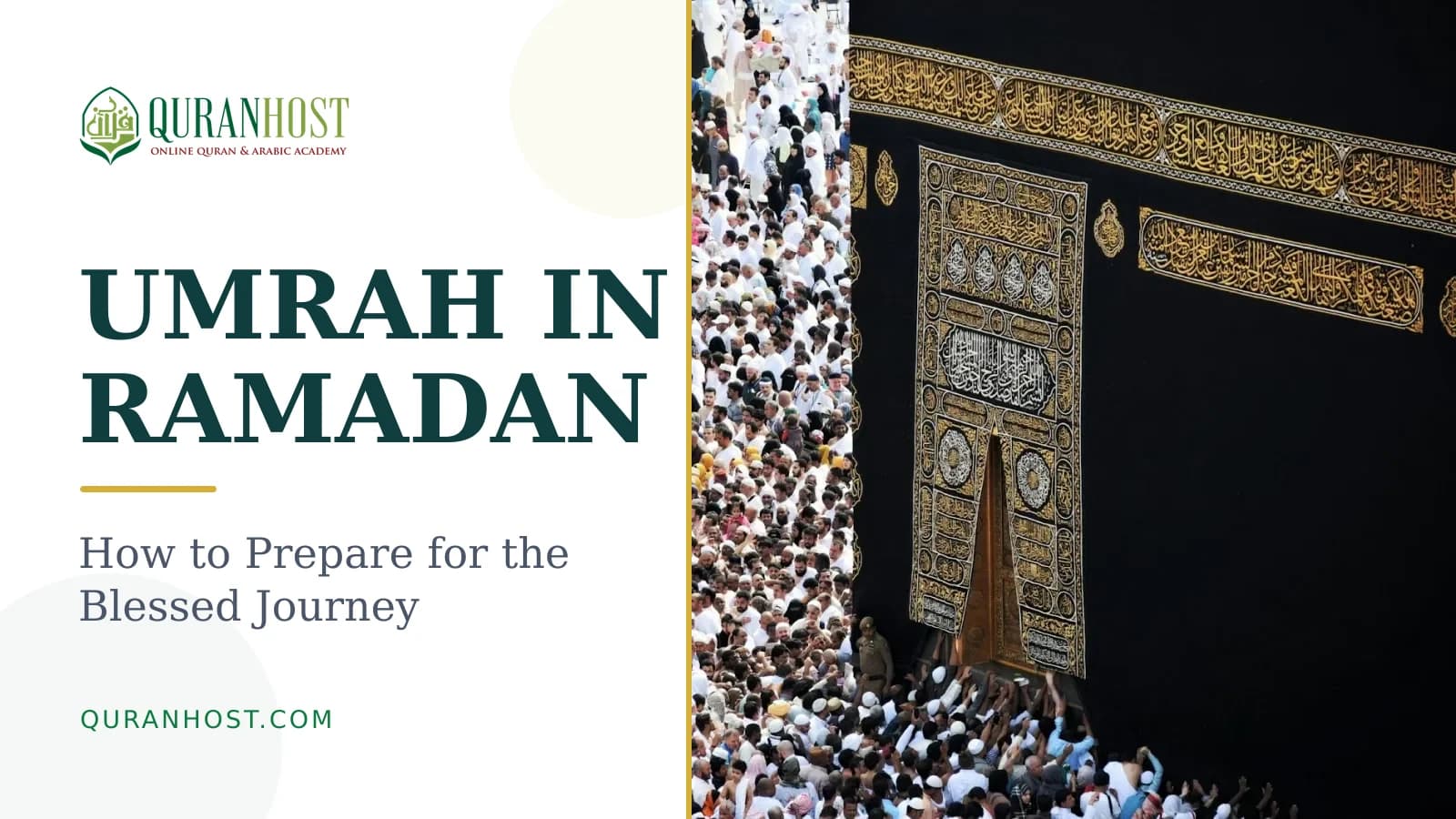
Umrah in Ramadan is one of the most sought-after journeys in the Muslim year, and for good reason. The Prophet (peace be upon him) singled it out for a reward unlike any other season. That is why the Haram in Makkah fills to capacity through the blessed month, and why the last ten nights draw crowds most pilgrims have never experienced anywhere else.
That popularity is exactly why preparation matters. Umrah in Ramadan is not simply Umrah with fasting added on top. You will be walking long distances while fasting, praying late into the night, waking for Suhoor, and moving through some of the densest crowds in the world. Pilgrims who arrive without a plan often spend their first few days exhausted and the rest of the trip catching up.
This guide covers what genuinely helps: understanding why the month carries such reward, learning the rites and the supplications before you travel, preparing your body for fasting and walking, and shaping a daily routine that leaves room for worship instead of filling every hour with logistics.
Why Umrah in Ramadan Carries the Reward of Hajj
Ibn Abbas (may Allah be pleased with him) reported that the Prophet (peace be upon him) asked a woman of the Ansar why she had not performed Hajj with him. She explained that her family had two camels: her husband and son had taken one for Hajj, and the other was used to carry water. He told her, “Perform Umrah when Ramadan comes, for Umrah in it is equivalent to Hajj.” This is recorded in Sahih al-Bukhari 1782 and Sahih Muslim 1256, and is graded authentic, agreed upon by both collections.
Two points deserve to be stated plainly, because they are often blurred.
First, the equivalence is in reward, not in obligation. Performing Umrah in Ramadan does not discharge your duty to perform Hajj. A Muslim who has the means and ability still owes that pilgrimage, however many Ramadan Umrahs they complete.
Second, scholars have differed over the scope of the promise. Some restrict it to the woman addressed in the narration. Others hold that it extends to anyone who intended Hajj but was prevented from going, and others read it generally. What no one disputes is that acts of worship carry greater reward in Ramadan than at other times, and that Umrah in this month sits among the most meritorious journeys a believer can undertake.
Plan Early, Because Ramadan Is the Busiest Season
Ramadan is the single busiest Umrah season of the year. Pilgrims arrive from every continent, so flights and accommodation cost more than at other times of year, and rooms close to the Haram are often taken months ahead. Finding a room at all can be difficult during the last ten nights, when demand is at its highest.
Booking early buys you more than a lower price. It buys choice: the dates you want, a location you have actually researched, and enough time to sort your documents without rushing. If you are travelling from Britain, it is worth comparing the Ramadan Umrah Packages UK on offer before you commit. Check the travel dates, how far the accommodation sits from the Haram, and exactly what each deal includes, so you can match a package to your budget and your needs rather than take the first one you see.
It also helps to know when Ramadan actually falls. Ramadan 1448 is expected to begin around 8 February 2027, which places it in winter for pilgrims travelling from Britain and North America. Our guide to Ramadan dates and fasting hours in the UK sets out the projected dates and how the moon sighting is confirmed.
Learn the Rites Before You Travel
Confidence on the ground comes from knowing what you are doing before you arrive. Umrah has four main parts: entering the state of Ihram with the intention and the Talbiyah, performing Tawaf around the Kaaba, completing Sa’i between Safa and Marwah, and then shaving or trimming the hair to leave Ihram.
Give particular attention to the Miqat. These are the fixed boundary stations around Makkah at which a pilgrim must enter the state of Ihram. Which one applies to you depends on the direction you are travelling from, and if you are flying, you may cross it in the air, so you need to know in advance when to make your intention. Crossing the Miqat without entering Ihram is one of the most common mistakes among first-time pilgrims.
If you want the full sequence with the detail of each step, read our step-by-step guide on how to perform Umrah before you leave.
Learn the Duas You Will Actually Use
Many pilgrims arrive with a thick booklet of supplications and end up reading none of them properly. A better approach is to learn a small number well.
Choose a handful of short, authentic supplications, learn what they mean, and practise saying them correctly. A dua you understand and can recite from the heart while making Tawaf is worth more to you than a page you stumble through. Our collection of duas for Hajj and Umrah is a sensible place to start.
This is also the part of your preparation that benefits most from a teacher. Pronunciation matters in Arabic, and a short course before you travel will usually do more for the quality of your worship than anything else on your list.
Prepare Your Body for Fasting and Walking
Umrah involves a great deal of walking, and in Ramadan you will be doing it without food or water through the daylight hours. The Haram complex itself is vast, and the walk between your accommodation and the mataf can be considerable once crowds slow you down.
Start walking regularly several weeks before you travel, and build the distance gradually. Comfortable footwear for use outside Ihram is worth spending money on. Blisters in the first two days can shape the rest of the trip.
Plan your eating and sleeping around Suhoor and Iftar rather than around a normal daytime schedule. Drink steadily between Iftar and Suhoor rather than all at once, and keep meals balanced. Avoid heavy physical effort in the hottest part of the afternoon, and save your energy for the night. If you take regular medication or have a condition affected by fasting or travel, speak to your doctor before you book, not after.
Prepare Your Heart
The practical list is the easy part. The journey itself asks for something more.
Before you travel, take time to settle your intention, seek forgiveness, and return anything you owe to others. Read Quran daily in the weeks beforehand so that recitation is already a habit by the time you arrive rather than something you are restarting. If you want a structure for this, our guide to learning Quran online during Ramadan offers a realistic daily routine.
Set two or three clear goals for the trip rather than ten. You might aim to complete a certain amount of Quran, to pray every obligatory prayer in the Haram, or to make specific duas for named people. Shopping and sightseeing are not forbidden, but they expand to fill whatever time you give them. Decide in advance how much of your trip they get.
What to Expect in the Last Ten Nights
The final ten nights carry the greatest reward of the month, and they are also the most crowded hours of the Umrah year. Pilgrims who have visited at other times are frequently unprepared for the scale.
If your trip covers these nights, leave far earlier for prayers than you think necessary. Journeys that take fifteen minutes at other times can take an hour. Entry to parts of the Haram may be managed by permit or capacity limits, so check the current arrangements through the official Saudi channels rather than relying on what was true last year.
Above all, keep the schedule simple. These nights are not the time for a packed itinerary. Build in rest so that you can actually stand in prayer when it matters most. Our article on the third Ashra of Ramadan explains what these nights represent and how to approach them.
Practical Tips That Make a Real Difference
A few small decisions carry disproportionate weight once you are there.
- Travel light to the Haram. Carry only what you need for that visit. A smaller bag moves through crowds more easily, is quicker through security, and leaves your hands free.
- Agree a meeting point. Phone signal near the Haram can be unreliable at peak times, and families get separated. Fix a landmark and a time before you set off.
- Pace your worship. Pilgrims routinely overcommit on the first two days and spend the next three recovering. Steady effort across the whole trip achieves far more.
- Keep documents secure. Keep your passport, permits and reservation details in one safe place, with a copy stored separately.
Choosing Where to Stay
Your accommodation shapes the trip more than almost any other decision. Staying close to the Haram saves time and spares you long walks, which matters a great deal for elderly pilgrims, families with young children, and anyone who needs to return to rest between prayers.
Accommodation further out usually costs less. If you choose it, check how transport works before you commit: how frequently it runs, how long the journey takes, and whether it operates around prayer times, when demand is heaviest. A cheaper room that leaves you stranded after Taraweeh is not a saving.
Beyond price and distance, look at room size, basic facilities and recent guest reviews. Reviews written during Ramadan are far more useful than reviews written in a quiet month.
Some pilgrims would rather have the flights, accommodation and transfers arranged as a single booking instead of assembling them separately. UK travellers can compare what specialist operators such as Cheap Umrah Packages put together for the month, then weigh that against booking each part yourself.
Preparing with QuranHost
QuranHost does not arrange travel, flights or accommodation. What we can help with is the part of your preparation that lasts: reciting correctly, understanding the words you are saying, and learning the supplications of Umrah properly before you go.
Our tutors include over 40 certified scholars and native Arab teachers from Egypt, among them graduates of Al-Azhar University and the Islamic University of Madinah. Many families book a short block of one-to-one lessons in the weeks before travelling, focused on Tajweed and on the duas they want to use at the Kaaba. You can try it with up to 3 free trial classes and decide afterwards.
Conclusion
Preparing for Umrah in Ramadan comes down to three things: knowing the rites, caring for your body, and protecting your time for worship. Learn the steps and the Miqat rules before you leave. Book early enough to have a real choice of dates and location. Train for the walking, plan around Suhoor and Iftar, and keep your daily schedule loose enough to absorb the crowds.
Most importantly, remember what the month is for. The reward promised for Umrah in Ramadan is extraordinary, but it rests on sincerity rather than on a flawless plan. A simple itinerary and an honest intention will serve you better than a perfect schedule and a distracted heart.
Umrah in Ramadan: Frequently Asked Questions
Direct answers on the reward, the timing and the rules pilgrims ask about most.