


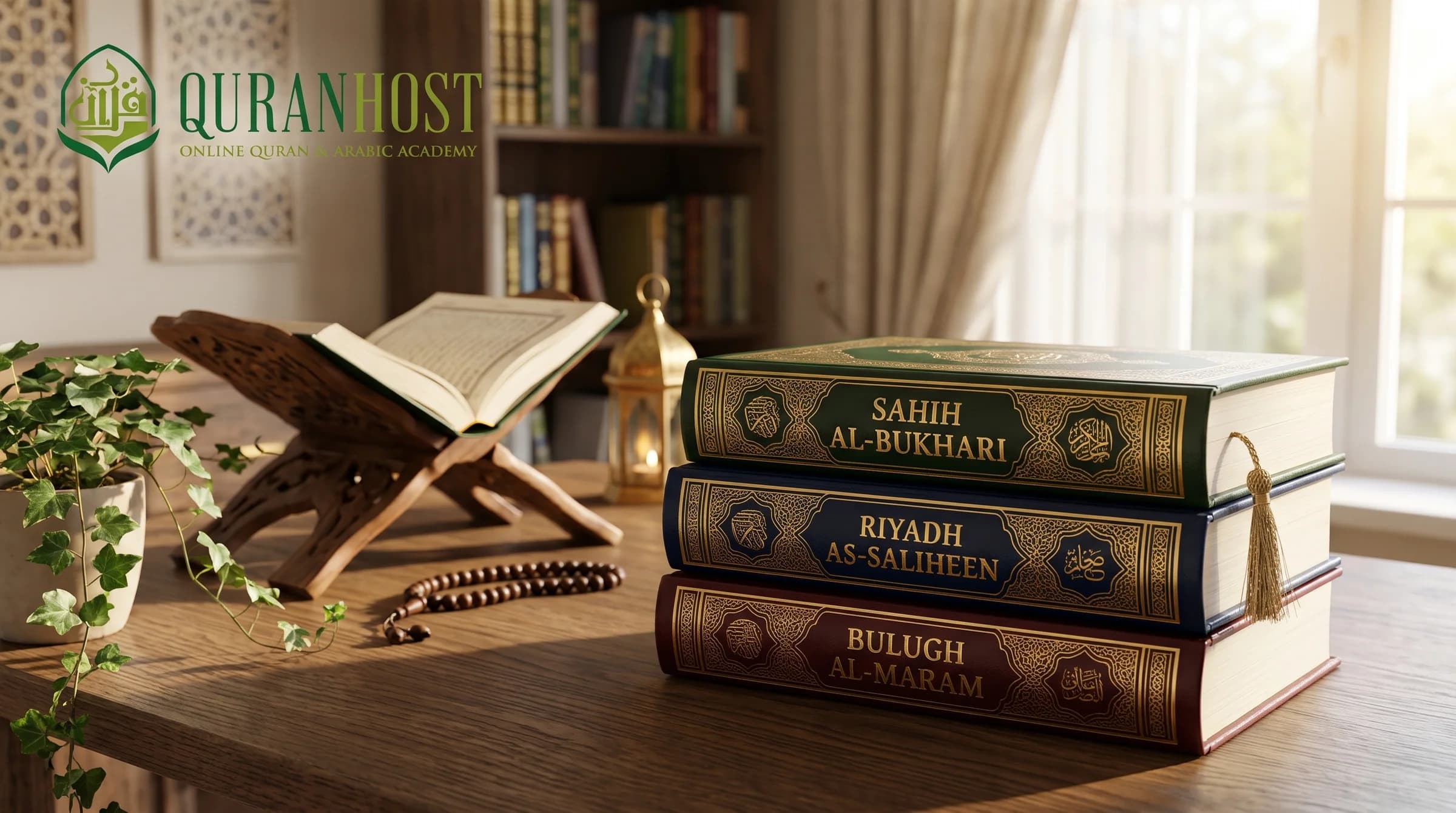
Three Hadith collections turn up again and again on the shelves of Muslim homes: Sahih al-Bukhari, Riyad as-Salihin and Bulugh al-Maram. They are not three versions of the same thing. Each was compiled for a different purpose, and each asks something different of the reader.
This guide explains what each collection contains, who it suits, where it is demanding, and how to choose an edition you will actually read. It also sets out a simple way to read Hadith at home, including with children, and when it is wise to ask a teacher rather than work something out alone.
None of this is a checklist of books every household must own. One good collection read steadily is worth more than three left unopened.
The three collections at a glance
Swipe the table sideways to compare.
| Collection | What it focuses on | Who it suits, and how to read it |
|---|---|---|
| Sahih al-Bukhari Muhammad ibn Isma’il al-Bukhari | Narrations the compiler judged to meet his own strict conditions, covering creed, worship, law, manners, tafsir and history. | A reference collection to consult rather than read straight through. Best approached through a summarised edition or with a teacher and a commentary. |
| Riyad as-Salihin Imam al-Nawawi | Character, sincerity, worship and daily manners, arranged by theme, with many chapters beginning on a relevant Quranic verse. | Often the most approachable of the three for a beginner, and well suited to reading aloud at home. Choose sections that suit the ages round the table. |
| Bulugh al-Maram Ibn Hajar al-Asqalani | Narrations that jurists use as evidence for legal rulings, arranged by the chapters of fiqh. | Study material rather than bedtime reading. Use an edition with commentary, and take questions to a qualified teacher. |
Sahih al-Bukhari: the major reference collection
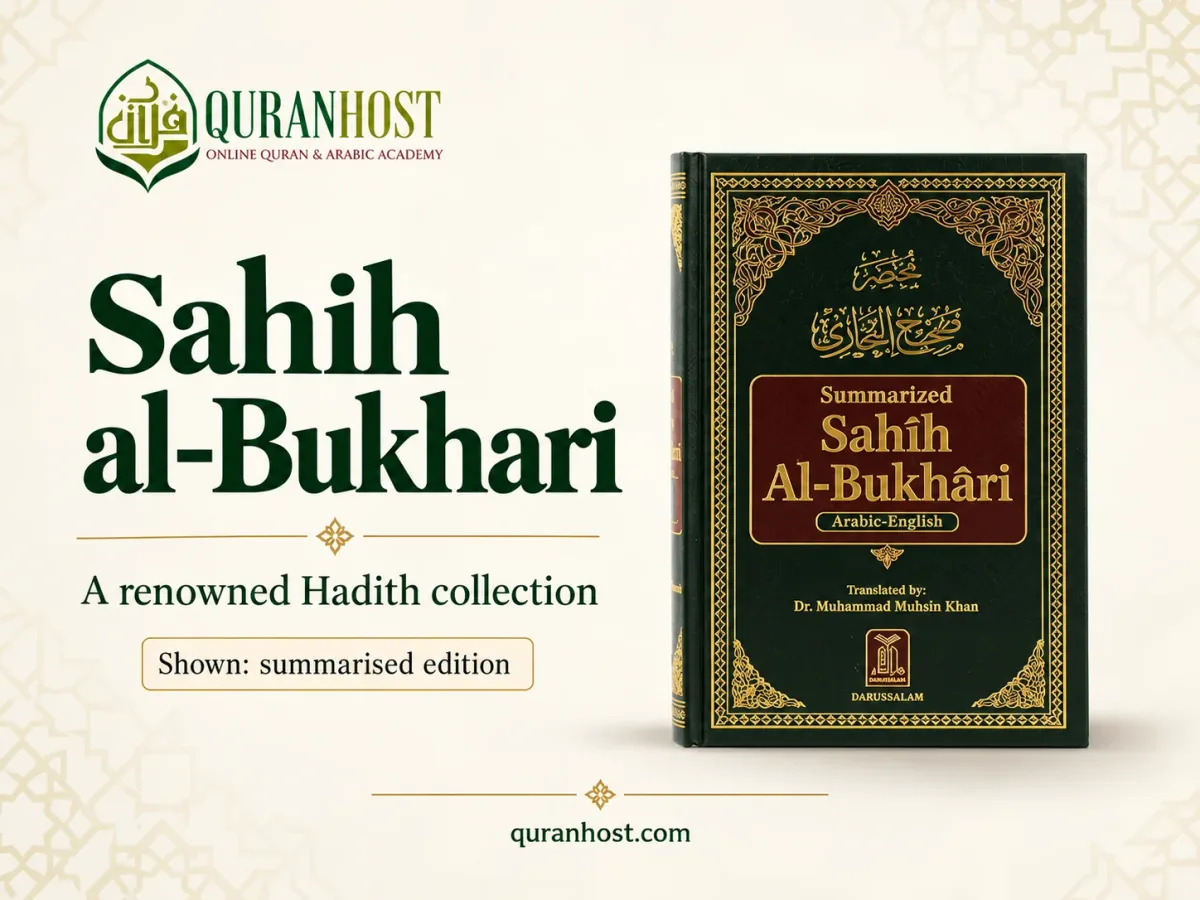
Sahih al-Bukhari was compiled by Muhammad ibn Isma’il al-Bukhari, who died in 256 AH (870 CE). Its full title is al-Jami al-Musnad al-Sahih al-Mukhtasar min Umur Rasulillah, and within Sunni scholarship it has long been treated as the most authentic book after the Quran. That standing rests on method. Al-Bukhari applied unusually strict conditions to the people in each chain of transmission, and he is reported to have selected his material from a far larger body of narrations gathered over many years.
The book is arranged into numbered books and chapters, and the chapter headings are themselves a layer of scholarship: al-Bukhari used them to signal how he read the narrations that follow. This is one reason the collection has attracted so much commentary, the best known being Fath al-Bari by Ibn Hajar al-Asqalani.
It is also why a complete Sahih al-Bukhari is a demanding first purchase. It is a reference work. Opening it at random gives you a narration without the context that shaped where al-Bukhari placed it. Most readers do better with a summarised edition, or with a teacher working through it chapter by chapter.
Riyad as-Salihin: character, worship and family reading
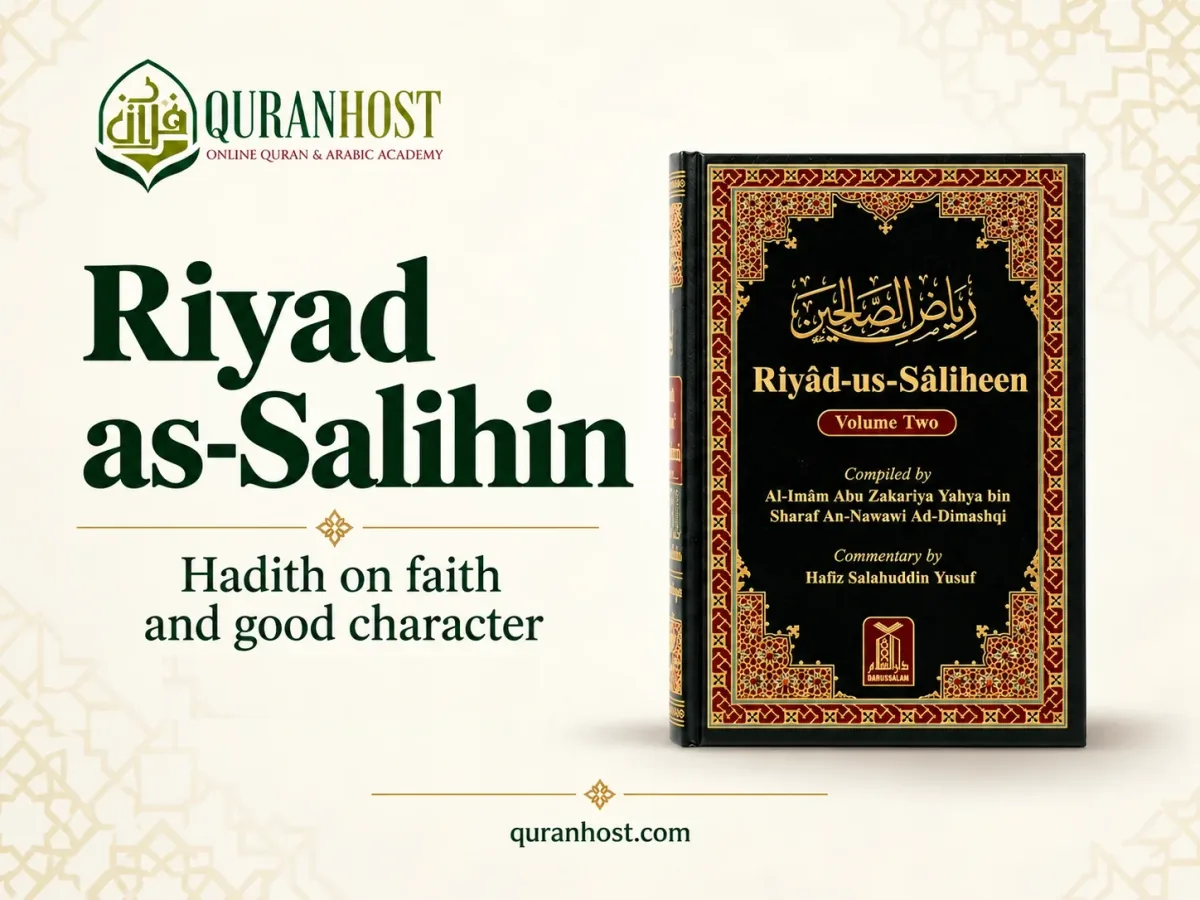
Riyad as-Salihin, “The Meadows of the Righteous”, was compiled by Imam Yahya ibn Sharaf al-Nawawi, who died in 676 AH (1277 CE). He was not simply a writer. He was one of the most eminent Shafi’i jurists and Hadith scholars of his period, and his works are still studied today.
The book is a thematic anthology. Al-Nawawi gathered narrations, drawn largely from the major collections, and organised them by subject, with many chapters beginning on a relevant Quranic verse before the supporting Hadith. The order of that is worth getting right: this is a collection of Hadith arranged by subject, with verses introducing each theme, rather than a commentary on the Quran.
Its concerns are practical and inward. Sincerity of intention, repentance, patience, truthfulness, kindness to parents and neighbours, the manners of eating, dressing and sleeping, and the remembrance of Allah. The purpose is devotional and educational rather than legal or technical, which is exactly why it reads so well at home.
Two things to keep in mind. It is not a legal reference, so it will not tell you how a ruling is derived. And while much of its material comes from the most rigorously authenticated collections, it also draws on others, so the narrations are not all of one grade; editions differ in how fully they note this.
Bulugh al-Maram: legal narrations and guided study
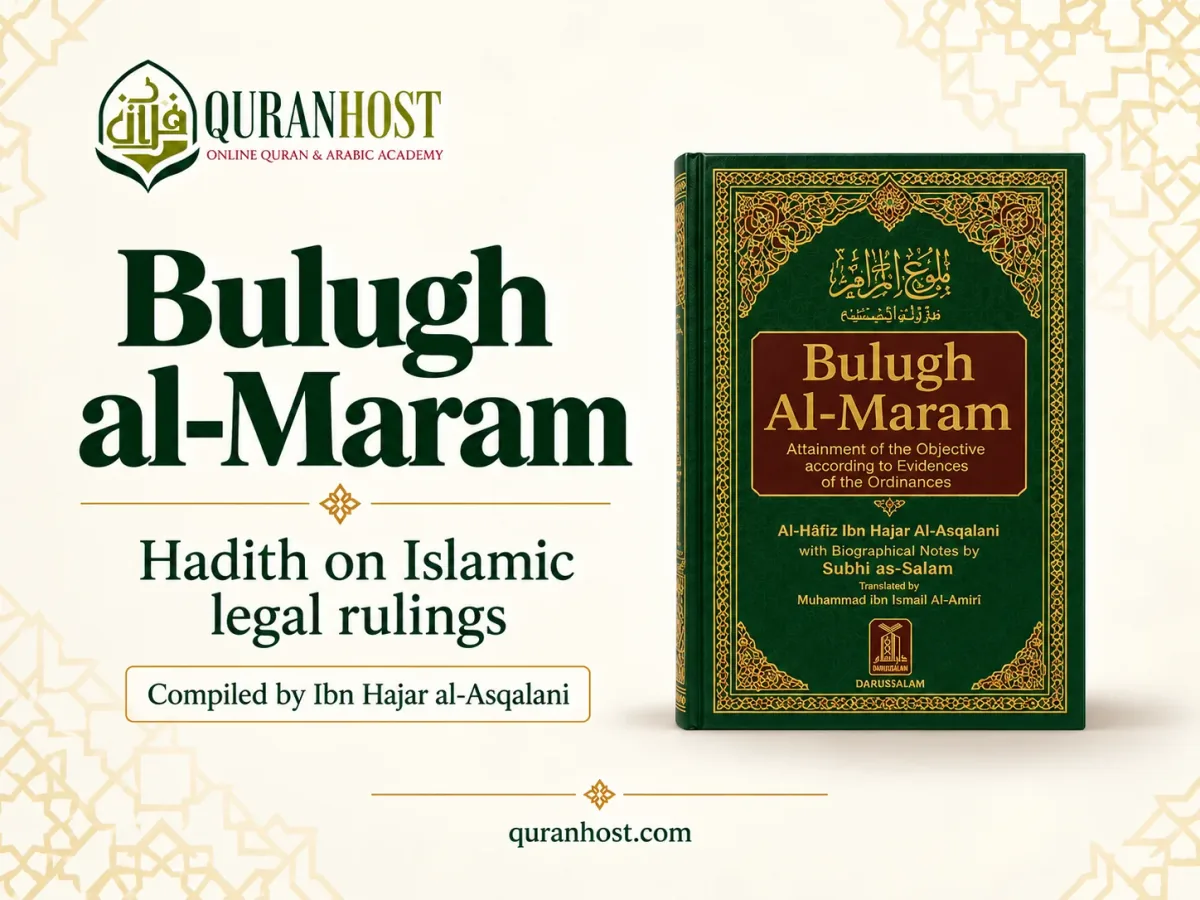
Bulugh al-Maram was compiled by Ibn Hajar al-Asqalani (1372 to 1449 CE), the same scholar who wrote Fath al-Bari. Its full title, Bulugh al-Maram min Adillat al-Ahkam, is usually rendered as attainment of the objective according to the evidence of the ordinances, and that is a fair description of the book’s job.
This is a collection of ahadith al-ahkam: narrations selected because jurists cite them as evidence when working out rulings. It is arranged by the chapters of fiqh, beginning with purification and prayer and moving through zakat, fasting, hajj, transactions and family matters. Ibn Hajar records where each narration comes from and compares the wording where a report appears in more than one source.
That last point explains why the book is not a shortcut to answers. A single narration rarely settles a ruling on its own. Jurists read it alongside other texts, consider the circumstances it addressed, weigh the strength of its chain and account for the positions of earlier scholars. Ibn Hajar included narrations of differing strength precisely because they are the material that scholarly discussion works on.
So treat it as study material. Most editions pair the text with a commentary, which is what makes it usable: in English the notes are commonly drawn from Subul us-Salam by Muhammad ibn Isma’il al-San’ani. Reading an isolated translated narration and drawing your own ruling from it is the one thing this book is not designed for.
Which book should a beginner start with?
For many people starting out, Riyad as-Salihin is an accessible way in, particularly in an edition with explanatory notes. The passages are short, the themes are recognisable from ordinary life, and the structure makes it simple to read a little at a time.
Sahih al-Bukhari comes first in standing, and that is a good reason to own a copy. It is not a good reason to begin by reading it cover to cover. A summarised edition, or a teacher-led reading of a few chapters, will teach you more than working alone through a complete set.
Bulugh al-Maram makes most sense once you want to see how rulings are actually evidenced, and it is best taken up with someone who can explain the reasoning.
You do not need all three. Many households get years of benefit from one.
How to choose a reliable translation or edition
Translations vary a great deal in quality and in what they include. Before buying, check the following.
- A named translator. The translator should be credited on the cover or title page, not left anonymous.
- An identifiable publisher. A publisher you can look up, with an address and a catalogue, is a reasonable baseline.
- Clear references. Each narration should carry its collection and number so you can trace it.
- A readable layout. Generous spacing, clear headings, and the Arabic alongside the English if you want to read both.
- Explanatory notes. Brief notes on unfamiliar terms and context make a far bigger difference than a longer word count.
- Complete or abridged. Check which you are buying. Summarised editions are genuinely useful, but you should know that is what you have.
Counts of narrations differ between editions, and the same collection is often listed with two different totals depending on whether repeated narrations are counted separately. A difference in the number on the back cover is usually a difference in counting method, not a sign that something is missing.
A simple routine for reading Hadith at home
This is one approach that works for many families, offered as a method rather than a rule. Adapt it, or ignore it, as suits your household.
- Read one short passage at a fixed point in the day, after a particular prayer or at the evening meal.
- Read the chapter heading and the Quranic verse first, where the edition gives one. The theme makes the narration easier to place.
- Talk about one practical application rather than trying to cover everything.
- Keep a notebook for questions instead of resolving them on the spot.
- Choose age-appropriate sections for children. Chapters dealing with punishments, trials or death are better left for later.
When a passage is unclear, or when it appears to conflict with another, that is the point to ask someone qualified rather than settle it yourself. Our article on Hadith Jibreel shows how much a single narration can carry once it is read closely.
If you would like that guidance structured, the advanced level of QuranHost’s online Islamic studies lessons includes an introduction to Hadith terminology and grading, which is the groundwork for reading these collections with understanding. For how the Quran itself makes claims on a reader, see the five rights of the Holy Quran over Muslims.
Frequently Asked Questions
Common questions about choosing and reading these three collections at home.
Sources and further reading
The descriptions of each collection above are linked in their own sections to the reference used: a scholarly overview of Sahih al-Bukhari and of Riyad as-Salihin, and the publisher record for an English edition of Bulugh al-Maram.
Beyond that, the most useful further reading is the collections themselves, in an edition that carries a commentary. For Sahih al-Bukhari, Fath al-Bari by Ibn Hajar al-Asqalani is the standard reference. For Bulugh al-Maram, Subul us-Salam by al-San’ani is the commentary most English editions draw on. Where a question matters in practice, a qualified teacher is worth more than any amount of further reading.