


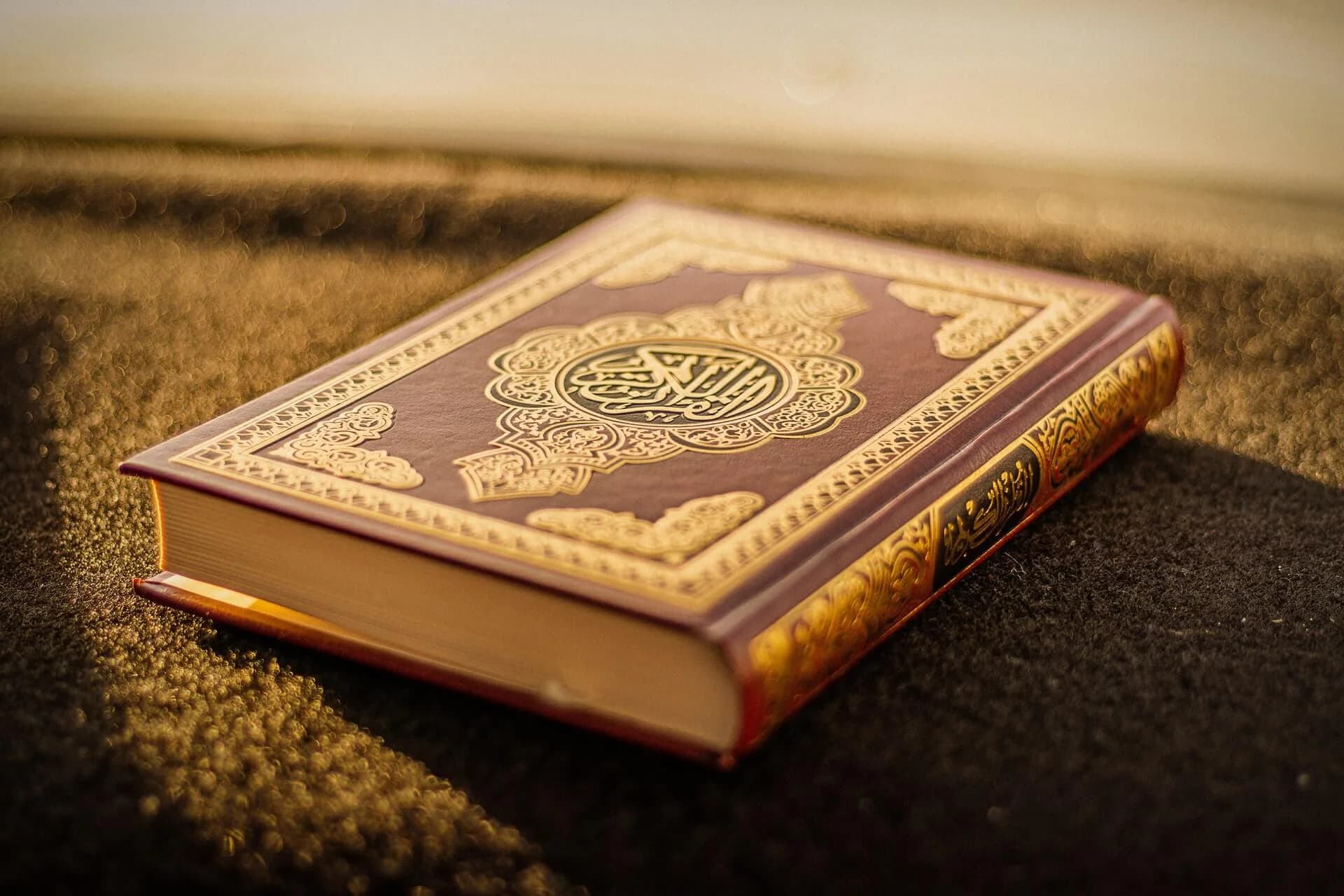
The Quran is, first and foremost, a book of guidance rather than a science textbook. Even so, many Muslims notice that some of its verses resonate with what we now understand about the natural world. It is worth being careful here: scholars differ on how far the Quran should be read scientifically, and a verse revealed in the seventh century is not the same thing as a modern scientific theory.
This article looks at five well-known verses, quotes each one accurately, and places it alongside the mainstream scientific understanding, without claiming that the Quran “predicted” or “proved” anything. The aim is reflection, not argument.
Quran Verses and the Natural World
1. The Origin of the Universe
The verse: “Do the disbelievers not see that the heavens and the earth were a joined entity, and We separated them, and made from water every living thing?” (Quran 21:30).
What science says: The Big Bang model describes the universe beginning about 13.8 billion years ago and expanding ever since. It was proposed by Georges Lemaître in 1927, supported by Edwin Hubble’s 1929 observation that distant galaxies are moving away from us, and later by the discovery of the cosmic microwave background by Penzias and Wilson in 1965.
The connection: Some Muslims read this verse, and “And the heaven We built with might, and indeed We are expanding it” (Quran 51:47), as resonating with the idea of a single origin and an expanding cosmos. This is a personal reflection, not a claim that the verse states the Big Bang theory.
2. The End of the Present Universe
The verse: “On the Day when We roll up the heaven like a scroll rolled up for books…” (Quran 21:104).
What science says: The ultimate fate of the universe is still an open question. One hypothesis, the “Big Crunch,” suggests the expansion could one day reverse and the universe collapse. Current observations, however, indicate that expansion is continuing and even accelerating, so the Big Crunch remains speculative rather than confirmed.
The connection: The verse speaks of the end of the present order in the language of guidance. It should not be presented as confirming any single cosmological model, especially one scientists themselves treat as uncertain.
3. Where Two Bodies of Water Meet
The verse: “He released the two seas, meeting side by side. Between them is a barrier which neither of them transgresses.” (Quran 55:19-20).
What science says: When bodies of water with different salinity, temperature and density meet, for example where a river enters the sea, or where two ocean currents meet, they can form a visible boundary that oceanographers call a halocline or pycnocline. These layers do gradually mix; the “barrier” is a density gradient rather than a solid wall.
The connection: The verse’s image of two waters meeting with a boundary between them is often linked to this phenomenon, while remembering that science describes a gradient, not a permanent separation.
4. How Clouds Form and Bring Rain
The verse: “Have you not seen that Allah drives clouds, then joins them together, then makes them into a heap, and you see the rain come forth from within it?” (Quran 24:43).
What science says: This closely resembles the formation of cumulonimbus (rain) clouds. Winds push smaller clouds together; they merge; and strong updrafts build them upward into towering heaps before heavy rain falls, a well-understood process in modern meteorology.
The connection: A striking resemblance to observed cloud development, described in the plain language of the seventh century.
5. The Origin of Iron
The verse: “…and We sent down iron, in which is great might and benefits for the people…” (Quran 57:25).
What science says: Astrophysics tells us that iron is forged in the cores of massive stars and in supernova explosions, then scattered across space. The iron found on Earth ultimately came from beyond our planet, with some delivered by meteorites during the solar system’s early history (a process known as stellar nucleosynthesis).
The connection: The verb “sent down” (anzalna) is read by some as resonating with iron’s cosmic origin, a reflection, offered without overstating the case.
A Note on Reading the Quran and Science
Muslim scholars have long differed on how far the Quran should be interpreted through modern science. Many caution against tying eternal scripture too tightly to changing theories, since scientific models are continually revised. The Quran’s purpose is guidance, belief, worship and good character, and its value does not depend on matching any particular scientific model.
Read in that spirit, verses like these can be a source of reflection and wonder rather than proof or debate. If you would like to study the Quran and its meanings with a qualified teacher, QuranHost offers one-to-one Tafseer and Quran classes online.
For more on the Book itself, see 10 fascinating facts about the Holy Quran.