


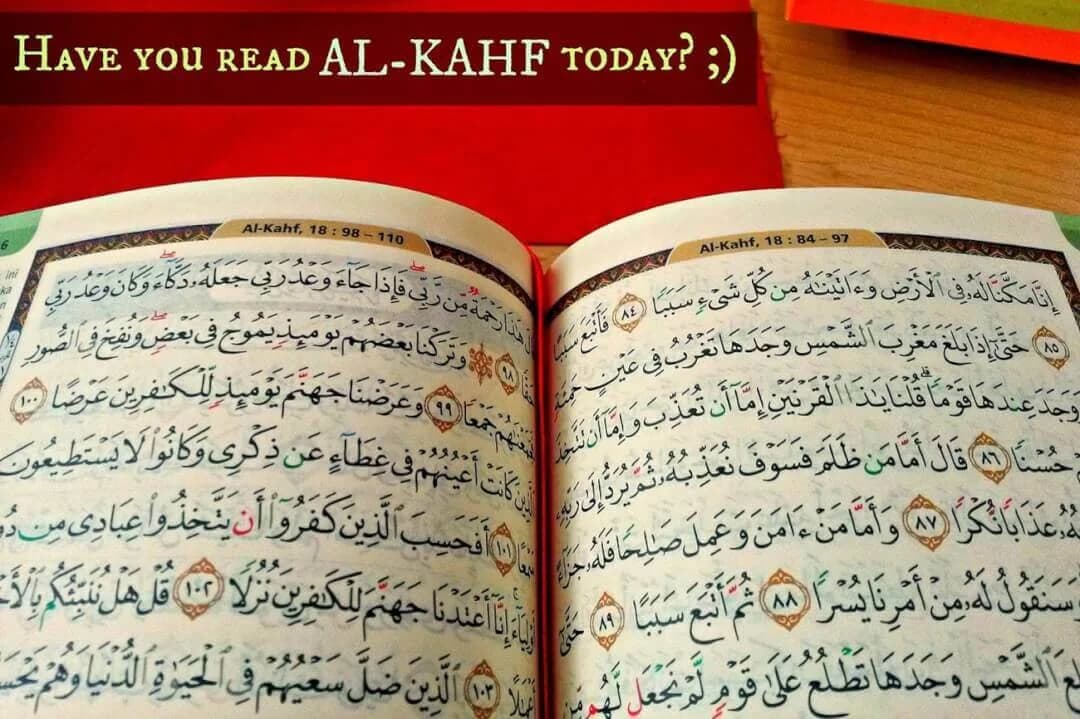
Every surah of the Quran has its own significance, and the Prophet ﷺ singled out some for particular virtues. Surah Al-Kahf (The Cave) is one of them: authentic hadith link it to protection from the Dajjal, and many Muslims recite it every Friday.
When you learn the Quran online, your online Quran tutors can help you read it correctly and understand its stories.
Importance in Islamic Tradition
Surah Al-Kahf is the 18th surah of the Quran. It is a Makki surah of 110 verses and spans the 15th and 16th juz. Two narrations about it are especially well known. The first concerns protection from the Dajjal:
مَنْ حَفِظَ عَشْرَ آيَاتٍ مِنْ أَوَّلِ سُورَةِ الْكَهْفِ عُصِمَ مِنَ الدَّجَّالِ“If anyone learns by heart the first ten verses of the Surah al-Kahf, he will be protected from the Dajjal.”
Sahih Muslim 809, narrated by Abu al-Dardaʾ; Sahih. In another transmission the wording refers to the closing verses of the surah.
The second concerns Friday. Abu Saʿid al-Khudri reported that the Prophet ﷺ said:
إِنَّ مَنْ قَرَأَ سُورَةَ الْكَهْفِ يَوْمَ الْجُمُعَةِ أَضَاءَ لَهُ مِنَ النُّورِ مَا بَيْنَ الْجُمُعَتَيْنِ“Whoever recites Surah Al-Kahf on Friday, he will be illuminated with light from between the two Fridays.”
al-Mustadrak al-Hakim 3392, narrated by Abu Saʿid al-Khudri. Scholars differ on whether these are the Prophet’s ﷺ own words. Al-Hakim and al-Albani (Sahih al-Jamiʿ 6470) graded it sahih as the Prophet’s words, while al-Dhahabi rejected al-Hakim’s chain. Al-Nasaʾi judged it more accurately Abu Saʿid’s own statement, a version whose chain Ibn Hajar called undoubtedly sound.
Many Muslims recite Al-Kahf on Fridays on the basis of these reports.
The Stories in Surah Al-Kahf
Surah Al-Kahf is built around four stories. A common way of reading them is that each is about a different kind of trial: the young believers who took refuge in the cave (faith), the owner of the two gardens (wealth), Prophet Musa and al-Khidr (knowledge), and Dhul-Qarnayn (power).
On the number of young men in the cave, the Quran reports what people said:
سَيَقُولُونَ ثَلَـٰثَةٌ رَّابِعُهُمْ كَلْبُهُمْ وَيَقُولُونَ خَمْسَةٌ سَادِسُهُمْ كَلْبُهُمْ رَجْمًۢا بِٱلْغَيْبِ ۖ وَيَقُولُونَ سَبْعَةٌ وَثَامِنُهُمْ كَلْبُهُمْ ۚ قُل رَّبِّىٓ أَعْلَمُ بِعِدَّتِهِم مَّا يَعْلَمُهُمْ إِلَّا قَلِيلٌ ۗ فَلَا تُمَارِ فِيهِمْ إِلَّا مِرَآءً ظَـٰهِرًا وَلَا تَسْتَفْتِ فِيهِم مِّنْهُمْ أَحَدًا“They [i.e., people] will say there were three, the fourth of them being their dog; and they will say there were five, the sixth of them being their dog - guessing at the unseen; and they will say there were seven, and the eighth of them was their dog. Say, [O Muḥammad], ‘My Lord is most knowing of their number. None knows them except a few. So do not argue about them except with an obvious argument and do not inquire about them among [the speculators] from anyone.’”
Quran 18:22, translation: Sahih International.
The verse itself does not state the number outright. It calls the first two views “guessing at the unseen,” passes no such judgment on the third, and says that only a few know. In his commentary on this verse, Ibn Kathir reads that as an indication that the third view, seven, is correct, and he cites the Companion Ibn ʿAbbas:
قال قتادة: قال ابن عباس: أنا من القليل الذي استثنى الله عز وجل كانوا سبعة. … فهذه أسانيد صحيحة إلى ابن عباس: أنهم كانوا سبعة، وهو موافق لما قدمناه.“Qatadah said that Ibn ʿAbbas said: ‘I am one of the few mentioned in this Ayah; they were seven.’ … The chains of these reports narrated from Ibn ʿAbbas, which say that they were seven, are Sahih.” (Abridged English translation.)
This is why many scholars speak of seven sleepers, while the verse itself teaches not to argue over such details. Many readers also note that the surah falls at the midpoint of the Quran’s 30 juz.
Why Was Surah Al-Kahf Revealed?
The best-known account of its revelation comes from the early biographer Ibn Ishaq, reported through Ibn ʿAbbas with an unnamed narrator in the chain, so it is not as firm as a sahih hadith. Ibn Kathir cites it at the start of his commentary on the surah. According to this account, the Quraysh, advised by Jewish rabbis in Madinah, asked the Prophet ﷺ three questions: about young men who disappeared long ago, about a man who traveled to the east and the west, and about the soul.
A Lesson About Saying “If Allah Wills”
In the same account, the Prophet ﷺ told them he would answer the next day without adding “in sha’ Allah” (if Allah wills), and no revelation came for fifteen days. The surah then answered the questions about the cave and Dhul-Qarnayn (the question about the soul is answered in Quran 17:85), and it includes this instruction:
وَلَا تَقُولَنَّ لِشَا۟ىْءٍ إِنِّى فَاعِلٌ ذَٰلِكَ غَدًا إِلَّآ أَن يَشَآءَ ٱللَّهُ“And never say of anything, ‘Indeed, I will do that tomorrow,’ Except [when adding], ‘If Allāh wills.’”
Quran 18:23-24, translation: Sahih International.
Protection From the Trial of the Dajjal
The Prophet ﷺ pointed to this surah as a protection from the Dajjal:
“He who amongst you would survive to see him should recite over him the opening verses of Sura Kahf.”
Sahih Muslim 2937, narrated by al-Nawwas ibn Samʿan.
Along with the people of the cave, the surah mentions Adam and Iblis (Quran 18:50), Musa and his young companion (named in Sahih al-Bukhari 122 as Yushaʿ ibn Nun) with al-Khidr, and Dhul-Qarnayn. Through these stories it teaches how to hold on to faith in times of trial. In one verse, Allah says:
وَٱتْلُ مَآ أُوحِىَ إِلَيْكَ مِن كِتَابِ رَبِّكَ ۖ لَا مُبَدِّلَ لِكَلِمَـٰتِهِۦ وَلَن تَجِدَ مِن دُونِهِۦ مُلْتَحَدًا“And recite, [O Muḥammad], what has been revealed to you of the Book of your Lord. There is no changer of His words, and never will you find in other than Him a refuge.”
Quran 18:27, translation: Sahih International.
The surah closes with this guidance:
فَمَن كَانَ يَرْجُوا۟ لِقَآءَ رَبِّهِۦ فَلْيَعْمَلْ عَمَلًا صَـٰلِحًا وَلَا يُشْرِكْ بِعِبَادَةِ رَبِّهِۦٓ أَحَدًۢا“So whoever would hope for the meeting with his Lord - let him do righteous work and not associate in the worship of his Lord anyone.”
Quran 18:110, translation: Sahih International.
Reciting Surah Al-Kahf on Fridays is a widely followed practice, and reflecting on its stories is a practical way to prepare for the trials of any age.
The Quran teaches through narrative elsewhere too. See the lessons drawn from Surah Yusuf, another chapter built around a single sustained story.